
AI IP Privilege Risks & Verification
Updated: Sep 26
Yet, this unvetted reliance on commercial large language models represents a catastrophic form of algorithmic negligence—one that structurally weaponizes your own proprietary data against you.

How can a top-tier intellectual property firm credibly defend a client’s multi-million-dollar patent portfolio when automated litigation workflows are actively leaking highly sensitive claim structures directly into external foundational training models?
According to critical cross-border synthesis, the evidentiary foundations of North American copyright and patent litigation are shifting rapidly. Two landmark developments illustrate this volatile new reality.
You can read the full article of May 26, 2026: Radsam's Tuesdays' AI Litigation Briefings, including:
Sahni v. U.S. Copyright Office (Section II)
Elsevier v. Meta (Section IX)
The Udio Illinois music copyright class-action lawsuit (Section III)
The Perplexity AI copyright dispute with an institutional publishing consortium (Section IV)
The Legal Risks of Public LLMs
From an AI governance and litigation-risk perspective, insufficient visibility into material algorithmic inputs can create governance, evidentiary, confidentiality, or professional-risk concerns depending on the facts and applicable duties. When legal counsel or trademark agents feed proprietary patent blueprints, confidential engineering factums, or technical source code into public, black-box algorithms, they may create confidentiality, privilege, contractual, discovery or trade-secret risk depending on the facts and applicable law under international data sovereignty parameters.
Furthermore, widespread automation bias routinely blinds litigators to subtle but devastating structural hallucinations that alter the semantic validity of historical prior art or complex intellectual property filings. Relying on baseline vendor assurances is no longer an acceptable legal standard; modern judiciaries demand empirical proof of algorithmic integrity. Failing to apply structured forensic validation exposes a practice to catastrophic evidence deactivation, structural court sanctions, irreversible malpractice allegations, and a total loss of commercial credibility before the bench.
The definitive defensive mechanism to neutralize these systemic liabilities is the immediate deployment of a Targeted Air-Gapped Shadow AI Audit on Factums / Master Cases before the Court. By executing these highly specialized audits in conjunction with Judicial Forensic AI Audit Standards—utilizing both Testifying Expert Witness frameworks and jointly retained neutral experts—elite law firms can rigorously stress-test their legal arguments, data lineage, and evidentiary records.
How Shadow AI Audits Can Support Privilege-Sensitive Workflows
In an appropriately scoped matter, an isolated local review environment can help legal teams examine analytical gaps and reduce defined external-processing pathways while maintaining a controlled technical record. Those controls do not themselves establish privilege, eliminate data-poisoning risk, or determine compliance or admissibility; the legal effect depends on the facts and governing law.
This can support controlled verification of automated research and reduce defined external exposure pathways. It does not itself establish compliance, preserve privilege or determine admissibility. Relying on unverified commercial AI invites hostile data exfiltration; a Shadow AI Audit can help identify defined workflow and verification risks; it does not guarantee operational continuity.
Within the Canada–U.S. legal corridor, localized or air-gapped audit systems may support data-control objectives where justified, but they are not universally required for jurisdictional compliance and do not by themselves protect firm's reputation.
In Ontario, this targeted auditing structure aligns your data workflows with the fundamental privacy baselines of PIPEDA and FIPPA, while ensuring documented compliance alignment with PHIPA guidelines for medical device and pharmaceutical patents, and LSO by-law mandated requirements. Ontario employment, privacy, public-sector and human-rights requirements should be assessed separately for applicability; governance controls can reduce risk but cannot guarantee legal defensibility or eliminate discriminatory outcomes. The profound advantage of deploying these localized frameworks is the creation of a legally sound perimeter that shields your litigation strategies. Ignoring these mechanisms leaves firms vulnerable to severe disciplinary actions, regulatory enforcement, and the immediate denial of comprehensive legal malpractice insurance protections.
Across U.S. matters, applicable duties depend on the forum, data, professional rules, contracts and the particular workflow. New York Part 161 addresses AI-assisted court papers; the SHIELD Act addresses qualifying data-security obligations; and the CLOUD Act concerns provider disclosure reach rather than privilege. Current U.S. federal AI policy should be cited only where it actually applies. Gap Analysis and AI Impact Assessment can support governance where proportionate, but they do not ensure compliance or prevent legal exposure. (Hepner v. United States).
An isolated, air-gapped auditing environment can support controlled review and may reduce selected external exposure pathways. ISO/IEC 42001, ISO/IEC 23894 and the NIST AI RMF can inform governance where relevant, while the EU AI Act applies according to its own scope and effective provisions. None of these sources creates a universal duty to deploy a particular Radsam system. Architecture alone does not establish privilege, compliance, admissibility, data sovereignty or preservation of intellectual-property rights; those questions depend on applicable law, contracts, provider behavior, system design and the facts.
I would welcome to exchange insights with AI and Legal Professionals in comments, and if you find this article helpful, I appreciate sharing with your network.
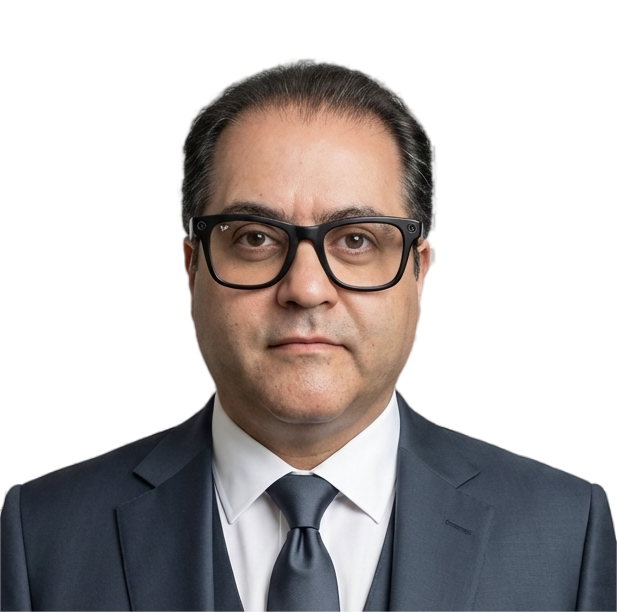
Author: Pouya Shafabakhsh Co-Founder, CAIO & Principal Forensic AI Auditor, Radsam Academy of AI Sovereign Governance. Independent AI governance and forensic-audit analysis. Educational information only; not legal advice.
Would you be opposed to finding your firm's AI gaps before opposing counsel or insurance companies do? I invite you to assess your firm using our AI Risks Calculator. Safely, securely, privately, and confidentially—with no need to enter any information, not even your email address—you can get a comprehensive AI Risks and Liabilities report in just five minutes.
If you have a sensitive file and want to protect it against AI hallucinations, bias, algorithmic discrimination, and AI-assisted risks through an Air-Gapped Shadow AI Audit before court, or if you are involved in a legal dispute related to AI and need a Judicial Forensic AI Audit, at Radsam, we are willing to assist you whether through our human-based services or by providing our in-house solution, the Sovereign Sanctuary Vault. In these cases, I invite you to fill out our Pre-Qualifying Assessment Form. We will review your information, qualifications, and capacity, and will contact you within two business days.
Updated September 2, 2026: AI use in IP and patent workflows can create confidentiality, discovery, contractual and privilege risks, but those effects are not automatic. The analysis must be grounded in the facts, the technology, applicable law and the specific engagement. Generative AI platforms are undeniably revolutionizing elite intellectual property practices, compressing complex prior art curation and sophisticated patent drafting from grueling weeks into mere minutes.
FAQ
What practical problem does AI IP privilege risks solve for legal teams?
AI IP privilege risks matters when it changes a legal, operational, or evidentiary decision. Start with the actual workflow and consequence. Then choose controls proportionate to the matter.
Which authorities should counsel verify before relying on AI IP privilege risks?
Start with binding law, court rules, professional duties, and contracts relevant to AI IP privilege risks. Separate guidance from mandatory authority. Recheck time-sensitive requirements before relying on them.
Which records best explain AI IP privilege risks if later challenged?
Preserve the sources, material outputs, versions, reviewers, approvals, and exceptions tied to AI IP privilege risks. Keep the record proportionate. It should explain consequential decisions without collecting everything.
Where should human review occur within AI IP privilege risks workflows today?
Human review should occur before AI IP privilege risks affects advice, evidence, filings, or external action. The reviewer needs authority to correct or stop the process. Record material overrides.
How should vendors support AI IP privilege risks without expanding unnecessary risk?
Technology supporting AI IP privilege risks should fit the defined workflow and data sensitivity. Review access, retention, security, exports, and vendor dependencies. Do not treat architecture as a legal guarantee.
When does independent review add value for AI IP privilege risks decisions?
Independent review helps when AI IP privilege risks raises unresolved technical or evidentiary questions. Define a narrow mandate first. Keep legal conclusions with counsel and technical findings within verified limits.
Which misconception most often distorts decisions about AI IP privilege risks today?
Do not assume one tool, log, metric, or control settles AI IP privilege risks. Context and corroborating evidence still matter. State technical findings proportionately and preserve important limitations.
Related Articles
For the governing or strategic frame behind ai ip privilege risks & verification, generative AI and attorney-client privilege explains confidentiality, vendor access, data location, and architecture boundaries.
To compare the closest operational issue raised by ai ip privilege risks & verification, law-firm AI data sovereignty examines confidentiality, vendor access, data location, and architecture boundaries.
For the evidence and reconstruction layer connected to ai ip privilege risks & verification, Ontario Cross-Border AI Evidence: Map Location and Control Separately focuses on the adjacent governance, evidence, and verification issue.
To connect ai ip privilege risks & verification with governance or implementation choices, cloud, local, and air-gapped deployment choices covers confidentiality, vendor access, data location, and architecture boundaries.
For the next practical decision after ai ip privilege risks & verification, AI agent authority and approvals provides context on agent authority, permissions, human approval, and traceability.


Comments